Pettah Effect: The Company Dilanjan Seneviratne Built for Sri Lankan Talent
Theewra Worldwide, 2012 | Pettah Effect's first release, 9 May 2018 | Open Mic, Rendezvous and On the Rocks | Red Bull Sri Lanka | the Easter Sunday attacks, COVID-19 and the 2022 economic crisis
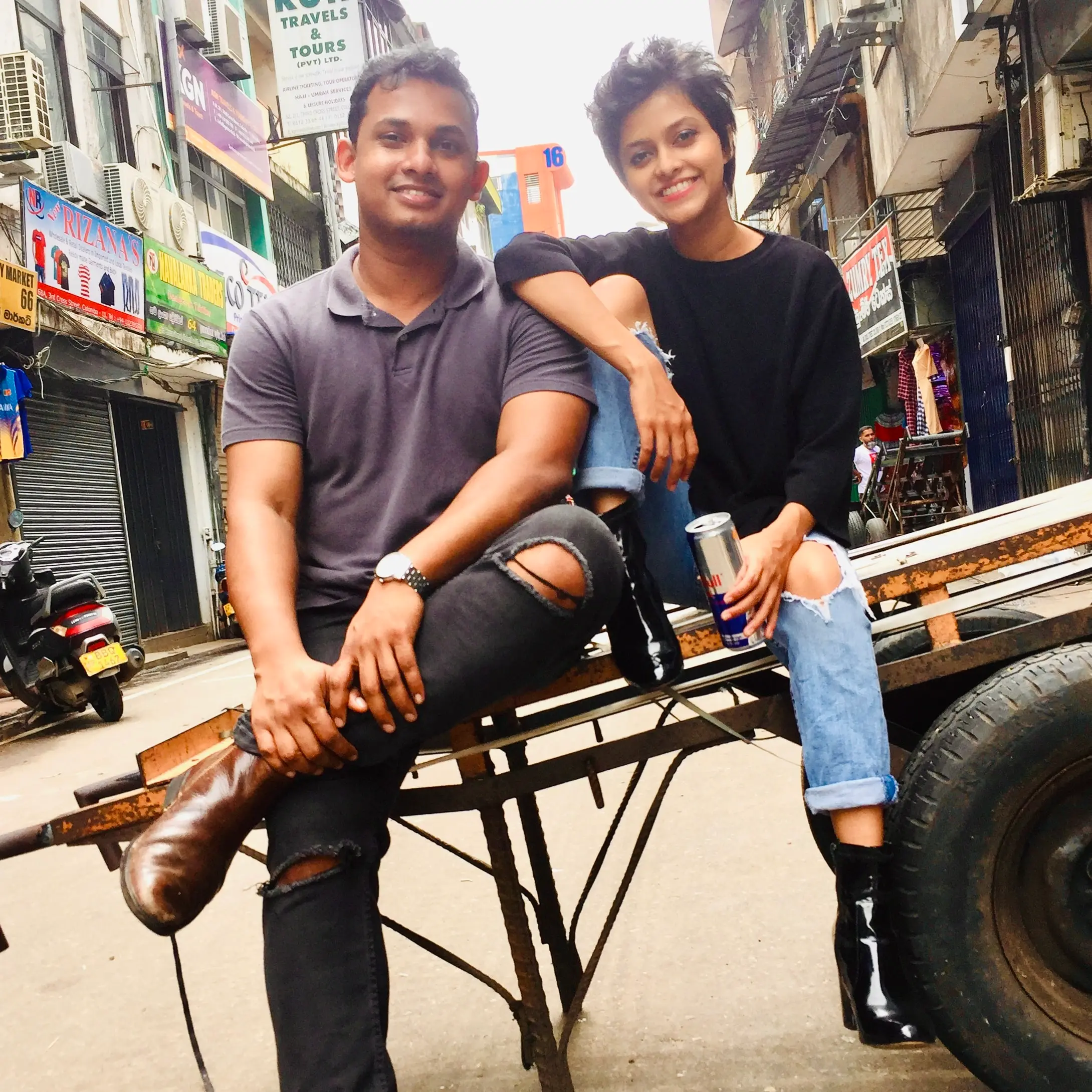
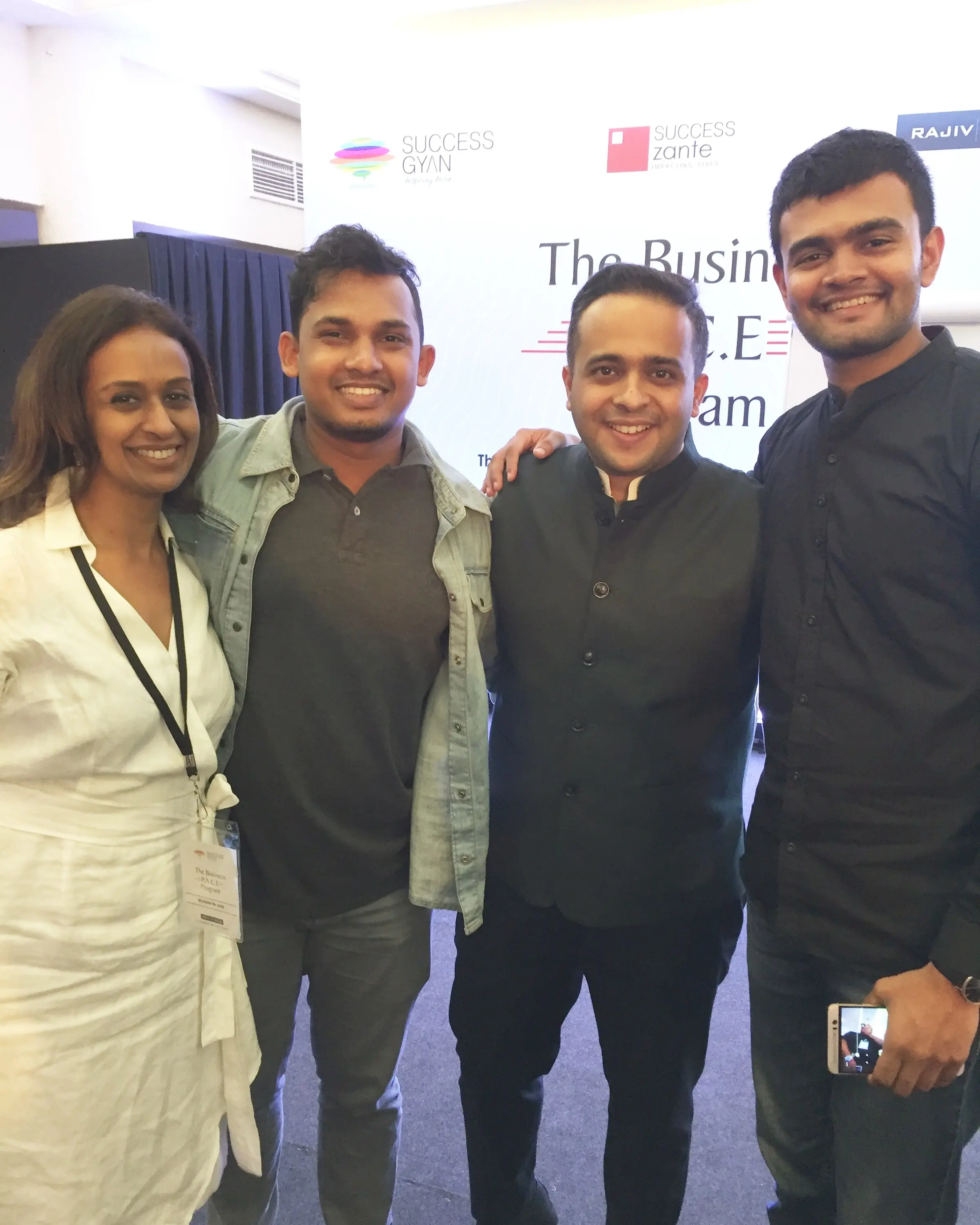
Between 2018 and 2022, Dilanjan Seneviratne ran Pettah Effect, a Colombo music company built on one idea: that Sri Lanka's shortage was never talent, only the infrastructure to develop it. In four years it auditioned artists in hotel lobbies, staged sold-out shows, partnered with Red Bull Sri Lanka and developed Yohani. Then three national shocks in succession took away the live economy it depended on.
This is the story of the company, from the idea to the economic crisis.
The Bank and the Laptop
Dilanjan finished his A-levels at Royal College, Colombo, in August 2010, in the English-medium Commerce stream. In September 2010 he took his first job, at Suntel, as a marketing executive selling PABX systems.
In May 2011 he joined Hatton National Bank as a trainee banking assistant at the Head Office branch, and was later made a banking assistant. In the evenings he edited videos on a small laptop, and before long he was editing for other people.
In 2012 he started Theewra Worldwide with Banura Sooriyapperuma, a colleague at the bank, and served as its Chief Operating Officer. Nuwan Wijesinghe, also from the bank, gave the company its name and worked on its first few projects before leaving for Australia. Shanellie White joined later and became the third partner. The early work was event photography and small commissions, fitted around full-time jobs.
After completing his bachelor's degree with first-class honours, Dilanjan became one of three management trainees selected from about 250 applicants through the bank's internal programme, and moved into Marketing. Banura moved to digital banking. HNB was then being rebranded by Interbrand and Deloitte, and the two worked close to that process. It gave them a working education in how global firms build brands.
Outside the bank, Dilanjan trained in dance and performed with Workshop Players in Evita and Jesus Christ Superstar, and in Jehan Aloysius's Pyramus and Thisbe, which toured to India for the Bharat Rang Mahotsav. He also won a Toastmasters speaking competition.
In 2015 he left the bank.
The Same Building
That year Dilanjan met Yohani. She was working at CMA CGM, which had offices in HNB Towers, the building he worked in. They met by chance, at a restaurant.
Yohani began helping Dilanjan and Banura on small photography projects. The team had cameras and equipment, and Dilanjan suggested she start a YouTube channel.
In March 2016 Theewra published her first video, a cover of Above and Beyond's Satellite / Stealing Time, with Dilanjan behind the lens. By September 2017 she had made 17 videos and built a following of close to 30,000. Her rap cover of Deviyange Bare, with Sanuka, passed one million views, and fans began calling her the Rap Princess. She then left for Australia to study, and continued uploading from there.
The Research
By 2016 and 2017 Theewra had staff and steady clients, and Banura had also left the bank. Dilanjan turned to a question that had followed him for years: why Sri Lanka had never produced a globally exportable artist.
He set out to answer it in person. He went to the open mics and concerts of the time, including the Mellomaniac sessions and Rock Saturday, and studied who performed and how they had entered the industry.
He found a pattern. The music festivals at Colombo's major schools produced real talent every year, and almost none of it reached the commercial industry. The artists who did break through had largely arrived through family connections or reality television. He found no clear route for an independent artist.
He identified four structural reasons:
Music as an extracurricular: it was treated as something to do after school, not as a career.
No artist development: nobody's job was to take raw talent and build it.
No labels: Sri Lanka's labels had disappeared with cassette and CD sales, and with them the people who invested in new artists.
Cost and rights: releasing a song was expensive, and covers sat in a legal grey zone. In Dilanjan's reading, Sri Lankan copyright law has no dedicated mechanical licensing provision, though YouTube covers were tolerated in practice.
None of these was a shortage of talent. Each was a gap in infrastructure, and infrastructure could be built.
The Name and the Vision
Pettah is Colombo's market district, where every kind of person meets. People arrive in a Mercedes or a tuk-tuk; street traders and business owners share the same lanes; Sinhalese, Tamils and every other community pass through. Dilanjan wanted that effect in music. Pettah Effect would take any genre, any language and any background. Anyone who could sing or play was welcome, with or without formal training.
The vision was Elevate Everything Entertainment: the conviction that Sri Lankan entertainment could be made to a global standard.
Dilanjan brought in a producer and recording engineer as a partner, and others joined over time. They later left, before the company's success. The funding came almost entirely from Dilanjan, and Theewra's resources supplied the video, editing, posting and social media.
The channel's first upload, a behind-the-scenes film with Dilanjan, went up on 4 April 2018. Pettah Effect's first public release went out on 9 May 2018, Dilanjan's birthday: Falan Andrea singing Sam Smith's One Last Song, still the oldest video on the Pettah Effect channel. The company was registered, and its plan was to bring brands in as sponsors once there was something worth standing beside.
Auditions were open calls, held in hotel lobbies, where artists sang or played before the team and the strongest were invited to the studio. Other young acts soon followed. By September 2018 the cover band Petra had released music on the Pettah Effect channel and told The Morning that the platform had motivated them to enter the band scene.
Forty-Two Songs in Thirty-Six Hours
The first round was ambitious. Dilanjan photographed every selected artist's press kit himself. The producer partner then recorded 42 covers live, at his home, in a continuous shoot of more than 36 hours, with Dilanjan directing and working as primary videographer.
Only 13 of the 42 were good enough to publish. The rest were strong performances in the room but did not survive as recordings, and the loss of time and money was heavy.
The lesson reshaped the company. A stage forgives a slipped note; a recording does not. From then on, Pettah Effect put artists in front of audiences first and brought them to the microphone when they were ready for it.
On 22 May 2018 Pettah Effect published a behind-the-scenes film of that shoot. By the middle of the year the company had moved to a larger round. In June 2018 it put out an open call: selected artists would receive three cover songs produced with video, free of charge, and coaching from seasoned artists. A workshop followed on 30 July and the Volume 2 live auditions on 5 August 2018, filmed at Margarita Blue in the Galadari Hotel, Colombo.
Development went beyond the studio. Pettah Effect ran workshops and clinics for its artists: vocal workshops with Dmitri Gunatilake and Monique Pallegama, sessions with Julius Mitchelle, guitar clinics with Mike De Silva from 19 August 2018, and sessions on personal branding led by Dilanjan himself.
Open Mic
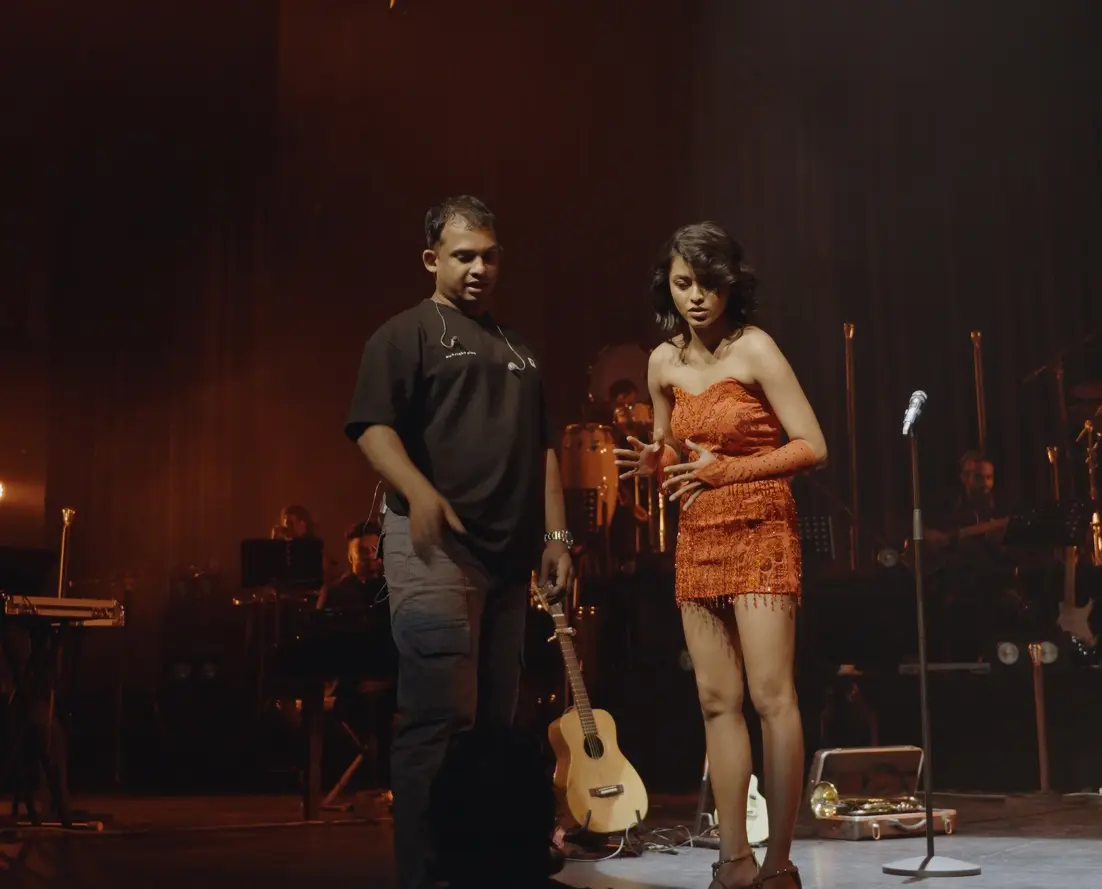
Colombo had a live open-mic scene, and Dilanjan named Pettah Effect's first concert Open Mic as a deliberate challenge to it.
The format was the reverse of an open mic. Every artist was hand-picked and brought three to five songs, performed in their own arrangement and without lyric sheets. Each rehearsed with a live band, and tickets were sold.
The first Open Mic, presented by Theewra, was held on Wednesday 5 September 2018 at Margarita Blue in the Galadari Hotel, Colombo, and sold out before the night. Falan Andrea, Harini Khanna, Singing Potatoes and Harini Diaz were on the bill. A second edition, Ready for Love, an evening of acoustic love songs, sold out as well: Sunday 30 September 2018 at The Re.Pub.lk, with Red Bull and Fender's distributor among the partners.
The model became the company's method. Pettah Effect funded the studio sessions, recorded the artists, marketed each show with the material, sold tickets and brought sponsors in for show day. It was the first time Dilanjan brought brands into the culture rather than simply in front of it.
Studio Weekends
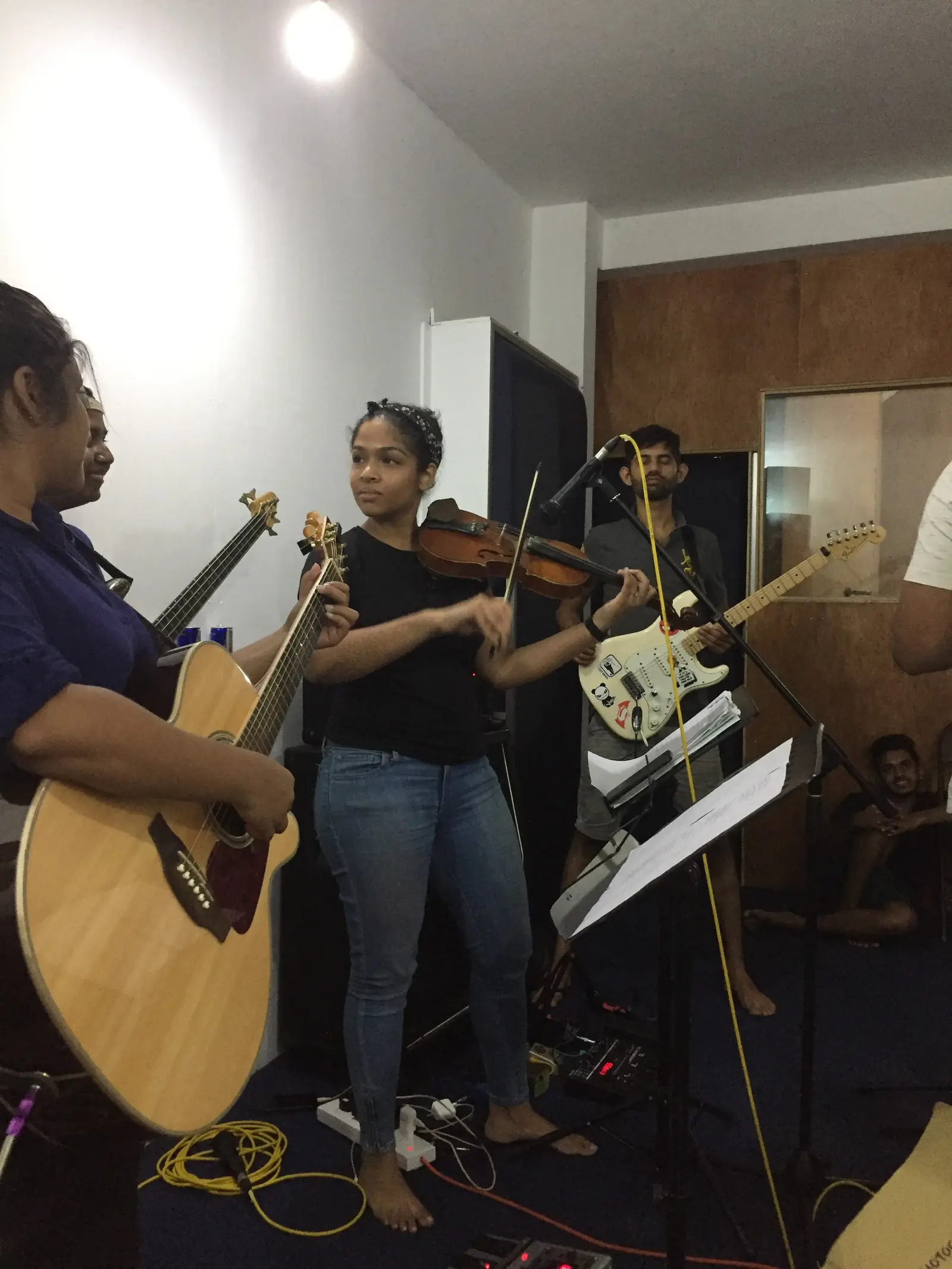
None of the artists were full-time musicians. Each had a day job, so the work happened at weekends. Studio sessions began on Friday at 7pm and ended on Sunday at about 4pm, with meals taken in the studio and rehearsals running through on Red Bull and coffee.
The first outside investment came from Inura Jayasuriya, then head of marketing at Red Bull Sri Lanka. Red Bull became a partner, and the relationship lasted for years.
As artists began to be booked for weddings, brand functions and corporate events, Dilanjan became their manager. Pettah Effect had a stage and a method, but not yet a single original song.
Rendezvous
In 2019 the stage grew. On 30 March, for Earth Hour, Pettah Effect presented an unplugged evening at the Trillium City Hotel with Yohani, Amarsha, Tharaka, Dewakie and Ashen. A fresh call for live auditions followed, set for 20 April 2019 and open to vocalists, instrumentalists, producers, composers and lyricists.
The next concert, Rendezvous, was set for Saturday 27 April 2019, with the Pettah Effect artists sharing one bill.
On Easter Sunday, 21 April 2019, coordinated bombings of churches and hotels killed more than 260 people. A state of emergency followed, social media was blocked for over a week, and events across the country were postponed or cancelled. The next day Dilanjan postponed Rendezvous. A concert was a day of celebration, Pettah Effect told its audience, and it did not seem right to celebrate while hundreds of innocent people had been killed or wounded.
On Saturday 22 June 2019, with the emergency still in force, Pettah Effect staged Rendezvous at Hatch in Colombo, billed as four hours of music following two sold-out shows, and it played to a full house. Many Pettah Effect artists took the stage that night. Among them was Yohani, back in Colombo after her studies in Australia, playing her first concert in Sri Lanka.
On the Rocks followed in November 2019 at The Arena, Hotel Galadari, with the hotel and Red Bull as partners alongside other sponsors.
Red Bull and the Mashup
The weekend sessions took a toll. Many artists, tired of the schedule, left. Yohani later told a newspaper that the programme had been rigid and demanding, including long pub and club residencies from Thursday to Sunday around Colombo.
The next step came from Red Bull. After conversations with Inura Jayasuriya, Red Bull Sri Lanka funded a culture programme for music: new artists chosen by audition would receive industry-standard production for covers, each launched with a music video on the Pettah Effect channel. Dilanjan entered the remaining Pettah Effect artists into the open auditions alongside everyone else, and three were selected, among them Yohani and Minura Halwathura.
Yohani's piece was a mashup of Sinhala pop hits: Thibuna Nam Hungak, Mata Aloke, Dhess, Katakaranam, Ahangakara Nagare, Thiththai Panirasa and Ran Wan. The songs were existing hits; the video was an original concept, shot in Pettah. Pop Hits (Ultimate Mash Up Cover) premiered on 5 December 2019 and spread quickly, later passing 10.3 million views.
On 14 December 2019, at Red Bull's year-end concert at Stein Studios, Ratmalana, Yohani and Minura shared a bill with Bathiya and Santhush and Lahiru Perera. At the Raigam SoMe Awards in January 2020, the mashup won Best Video Remake.
Together with her cover of Pana Senehasa, premiered on 26 November 2019, the mashup built the audience for Unfiltered Night on 24 January 2020 at the Wonder Hotel, Colombo: a four-hour ticketed show, with LUNU backing Yohani throughout.
The Artists
Pettah Effect was built as a starting point, and most of its artists moved on.

Falan Andrea: on the first Open Mic bill; the first video Pettah Effect released.
Harini Khanna, Singing Potatoes and Harini Diaz: part of the first Open Mic.
Dot Dotayy: founding members Hidayath and Mewan met through Pettah Effect.
LUNU: formerly the band Fifteenth March, credited on Yohani's Pana Senehasa cover. Dilanjan assembled the instrumentalists and renamed them LUNU, the Sinhala word for salt, to carry Sri Lankan culture in a single word. LUNU played pubs and clubs, backed Yohani and toured with her.
Ama Jayasinghe: signed without an audition; her first original was a Pettah Effect-owned song, given to her free of charge.
Medhavi Jayaratne: released her debut single, Sirakariya, on the Pettah Effect label, with lyrics and direction by Dilanjan.
Amarsha Tissera: stepped away from music midway and later joined Outright Play.
Yohani: the artist who kept going.
Inura Jayasuriya and Mike De Silva are remembered by Dilanjan as early supporters of the company.
An academic study captured the company at its height. A Masters thesis by Mekhala Egodawele, submitted to Southern Cross University in August 2023, used Pettah Effect and Theewra Worldwide as two of its three case organisations, drawing on interviews with Dilanjan as Pettah Effect's co-founder and A&R director. It described Pettah Effect as an independent record label focused on long-term artist development with a global outlook, managing around 25 to 30 artists from diverse backgrounds and producing their music at no cost to them.
The study set out the company's structure: a director of sales and marketing, a head of production, digital specialists, public relations and content specialists, sound engineers, producers and brand executives. Its services ran from audio and video production to branding, public relations, distribution and artist management. Theewra Worldwide, running since 2012, managed the artists' digital channels and social media strategy alongside it. The method, as Dilanjan described it, was to spend the first three years developing an artist before taking them to market, and to plan around the artist's long-term brand rather than any single release.
2020
On 26 February 2020, Prima KottuMee announced Yohani as its brand ambassador, a national food brand choosing an artist developed entirely outside the industry's traditional routes.
On 20 March 2020, Sri Lanka entered a nationwide COVID-19 curfew. With Avurudu approaching and crews unable to move, Dilanjan pitched Prima a raban mashup that could be made under lockdown, shot the video himself on an iPhone and sent it for editing. The Raban Mashup ran as a Prima KottuMee campaign through the agency TBWA\Sri Lanka, with audio by Redfox, and was recognised internationally.
On 30 May 2020, Yohani performed at the BnS drive-in concert in an aircraft hangar at Ratmalana, to an audience in their cars. Inura Jayasuriya was one of the comperes.
With live shows on hold, Pettah Effect turned to original music. Aaye, Yohani's debut original, premiered on 27 August 2020 on the Pettah Effect label, with lyrics by Dilanjan. Sitha Dawuna followed on 8 September, produced by Chamath Sangeeth with the rapper Hiyum, and Yohani sang a rap written by Dilanjan. Rawwath Dasin, a tribute to her father with Chanuka Mora, premiered on 5 December, and on 21 December 2020 came Merry Christmas Baby, her first original English music video, with lyrics Dilanjan wrote in November 2019 and a mix at Pettah Effect Studios.
The company now owned songs, but not revenue. Its model depended on show day, where tickets, audiences and sponsors met, and the pandemic closed that room for about two years while salaries still had to be paid.
Running on Empty
On 30 January 2021 Yohani released Haal Massa, with a video directed by Dilanjan and produced by Theewra.
On 22 May 2021, Yohani and Satheeshan's cover of Manike Mage Hithe was uploaded to Chamath Sangeeth's channel. It was not a Pettah Effect production, but its singer was the artist Pettah Effect had spent three years developing. By 11 September 2021 it had passed 100 million views on YouTube, while Sri Lanka was again in island-wide lockdown from 20 August to 6 September 2021.
India followed. Yohani played Studio XO in Gurugram on 30 September 2021 and Hyderabad on 3 October, with LUNU behind her. On 5 October Dilanjan took her to Mumbai, where they met Sonu Lakhwani, and on 7 October the three met Bhushan Kumar of T-Series in person, the start of talks to sign her. On 11 November 2021 Yohani released Moving On through Red Bull Records, with lyrics by Dilanjan and a video he wrote and directed, produced by Pettah Effect with Theewra. On 17 March 2022 T-Series signed Yohani as an exclusive artist.
The attention was global; the company's finances were not. Then Sri Lanka's economy collapsed. From February 2022 the country had rolling power cuts, which by 31 March ran for thirteen hours a day. On 12 April Sri Lanka defaulted on its debt. Fuel queues stretched for kilometres, and on 27 June the sale of petrol was halted. The Aragalaya protests filled the streets, and on 9 July protesters entered the President's House. For about a year, Sri Lanka had no functioning entertainment economy.
The shocks had come in order: the Easter Sunday attacks in 2019, two years of COVID-19 from 2020, and the economic collapse of 2022.
In 2022 Dilanjan moved to Mumbai with Yohani, and Pettah Effect effectively stopped. Two years of salaries without live shows, followed by a year in which the economy itself had stopped, had used up its funds.
What Remained
The model had worked. Talent was found, trained, recorded, marketed, sold and sponsored, and one artist went all the way to India and beyond. What failed was the environment the model depended on, three times in four years.
Pettah Effect left three things behind: an artist who kept going; a method of finding talent outside the traditional routes, training it for the stage and the studio, and bringing brands into the culture; and a conviction. Travelling for Yohani's work, the team was routinely taken for Indian. Sri Lankan music, sound and culture were their own, and in 2024 Dilanjan founded a company in Sri Lanka to export them.
That company is Outright Play.