Who gets paid when a song is played?
A song can travel further than its writer ever will. Whether the money follows depends on a system most listeners never see.
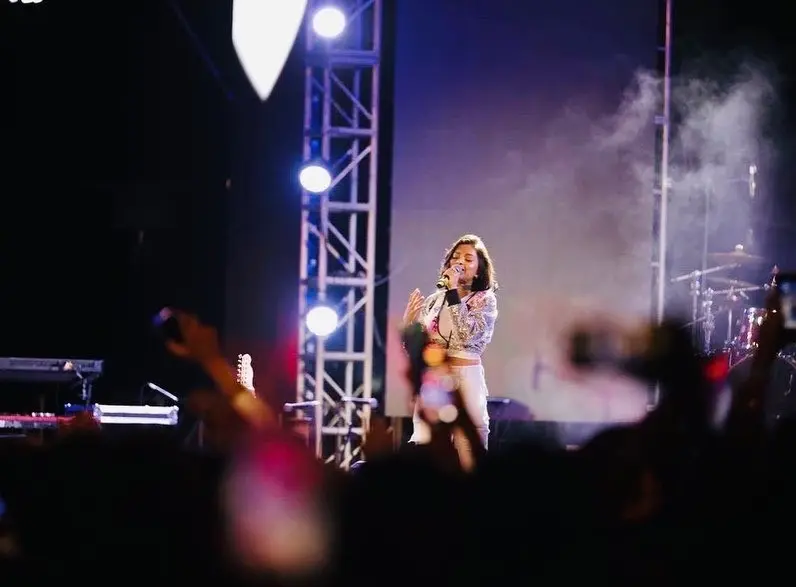
A song is playing right now in a hotel lobby you will never visit.
Nobody asked for it. Nobody is listening to it, exactly. It is just there, under the sound of luggage wheels and a receptionist saying good evening. It has been playing in rooms like this for forty years.
Somebody wrote it.
That is the whole essay. Everything else is detail. But the detail is where the money goes, so stay.
Three things in one song
You think a song is one thing. The law thinks it is three.
There are the words and the melody. The composition. It belongs to the person who wrote it, the way a house belongs to the person who built it.
There is the recording. That specific take, that specific room, that specific Tuesday. It belongs to whoever paid for the session.
And there is the performance. The voice. That belongs to the singer.
Three properties. Often three owners. Stacked inside three minutes.
Most arguments about music money are arguments between people who think they own all three and people who are trying to tell them they own one.
The singer is not the song
In the 1970s a man in Nugegoda wrote the words to a song. A composer set them. A singer sang them. The singer sang them for forty years, at every concert, on every stage, and was paid every time he did.
The man who wrote the words was paid once.
In 2011 a concert recording was pressed to DVD and sold at a thousand rupees a copy. The singer said yes. Nobody asked the writer. When he objected, the company told him the singer had sung it for forty years, so what was his problem.
It took fourteen years. In March 2026 the Supreme Court of Sri Lanka gave him one million rupees and one sentence the whole country should memorise: permission to sing a song is not permission to own it.
The singer owns the voice. The writer owns the words. Both were in the room. Only one was paid for being there.
Who pays
Not you.
Nobody has ever been charged for listening. Not in your car, not in your kitchen, not in the 175 years this system has existed. The bill goes to whoever is selling something with the music inside it. The hotel. The restaurant. The radio station. The promoter with the ticket money.
A five-star hotel in Colombo pays thirty rupees a room a night for the music in its lobby. On a thirty-thousand-rupee room. That is one-tenth of one percent. If anyone tells you the writers are why your bill went up, ask to see the arithmetic.
Three men refuse to pay for their drinks
Paris, 1847. Three composers are sitting in a café listening to the house orchestra play their songs to a full room. The bill arrives. They refuse it.
You charged us for the drinks, they say. You have not paid us for the music. The music is why the room is full.
The owner laughs. They take him to court. They win.
Then they discover the real problem. One judgment. A thousand cafés. Three composers cannot stand at a thousand doors every night.
So they do something nobody had done. They pool their rights into one society. One contract per venue instead of a thousand composers at the door. The society collects, keeps a little for the lights, and pays each writer by how often the music was played.
That is a collecting society. It was invented by three men who would not pay for their drinks. Britain copied it. America copied it. India copied it. Sri Lanka got around to it in 2003 and is still arguing about it.
The pipe
Here is the part nobody explains, and it is the only part that matters.
In 1886 ten countries signed a treaty in Berne. I will protect your writers if you protect mine. Around 180 countries belong today. Sri Lanka has been in it since the day it became independent.
But a treaty is a promise between governments. The money moves through the societies, by contract. The French society pays the British one. The British pays the Indian. The Indian pays whichever society exists in Colombo.
So picture a Sri Lankan song that goes viral in India. Every radio play, every mall, every wedding generates a royalty, and the Indian society collects it. That money comes to Colombo through exactly one door: a Sri Lankan society with a reciprocal contract.
No society, no door.
The money sits in Mumbai. After about three years, under rules every society in the world uses, it is paid out to Indian writers. Our song, played in their country, paying their composers.
It runs the other way too. Every Hindi song in a Colombo hotel, every English song on our radio, earns money that should flow out to whoever wrote it and never does. We take the world's music for free and give our own away for free.
A song can travel further than its writer ever will. Whether the money follows is a plumbing question. Right now, the pipe ends at the beach.
The honest part
The system is right. The way it arrived was not.
Every country that built one of these has, over 175 years, added four things: somewhere to appeal a tariff, a separate society for singers and producers, a licence for covers, and rules forcing the society to publish its numbers. Sri Lanka has none of them. The society that gazetted a tariff this year priced weddings, which no country does, and has rightly paused that. It explained itself to the public so badly it set the idea back years.
Fix all of it. None of it touches the principle. Nobody abolished copyright because the printers abused it in 1600. They fixed the law and kept the right.
The lobby
Go back to the hotel.
The song is still playing. The hotel is still full. The receptionist is still saying good evening.
Somewhere there is a person who wrote those words at a kitchen table, in a year you were not born, for reasons that had nothing to do with hotels. They should get something for the lobby. Not much. Thirty rupees on a thirty-thousand-rupee room.
That is all a royalty is. The smallest possible acknowledgement that the room is full because of something somebody made.
The next writer should not need fourteen years and a Supreme Court to get it.
They should need a membership form, a society that works, and a country that understands what it signed in 1886.
- Author
- Dilanjan Seneviratne
- Related
- Music publishing
Credits are drawn from supplied professional profiles and release metadata, and are confirmed against primary sources before publication.